In the Netherlands · 06/06
Mimosa hostilis root bark, traced from tree to bag
Where Mimosa hostilis root bark comes from, how it is dug and dried, how to judge whole, shredded and powdered bark, its names and the law per country.
- Contents
- Inner root bark, whole
- Origin
- Caatinga, Brazil
- Delivery area
- Netherlands, 18+
- Last checked
- 16 Oct 2026
Shipment history
Newest first · each entry links to its checkpoint
-
16 Oct 2026Netherlands 06Ready for adult buyers in the Netherlands
Avalon Magic Plants sells whole inner root bark in seven sizes, from 50 grams to 10 kilos, to adults. This site offers it for a stay in the Netherlands only.
Open checkpoint 06: Buying guide -
16 Oct 2026Border check 05Legal status checked for six countries
DMT is controlled everywhere covered here. France and the US state of Louisiana name Mimosa hostilis in law; elsewhere the bark's status depends on court rulings, intent or unclear wording.
Open checkpoint 05: Legal status -
16 Oct 2026Label check 04Name checked against the botanical record
Mimosa tenuiflora (Willd.) Poir., published in 1810, is the accepted name. Mimosa hostilis Benth., from 1875, is a later synonym for the same tree.
Open checkpoint 04: Naming -
16 Oct 2026Drying and packing shed 03Bark dried, sorted and left whole
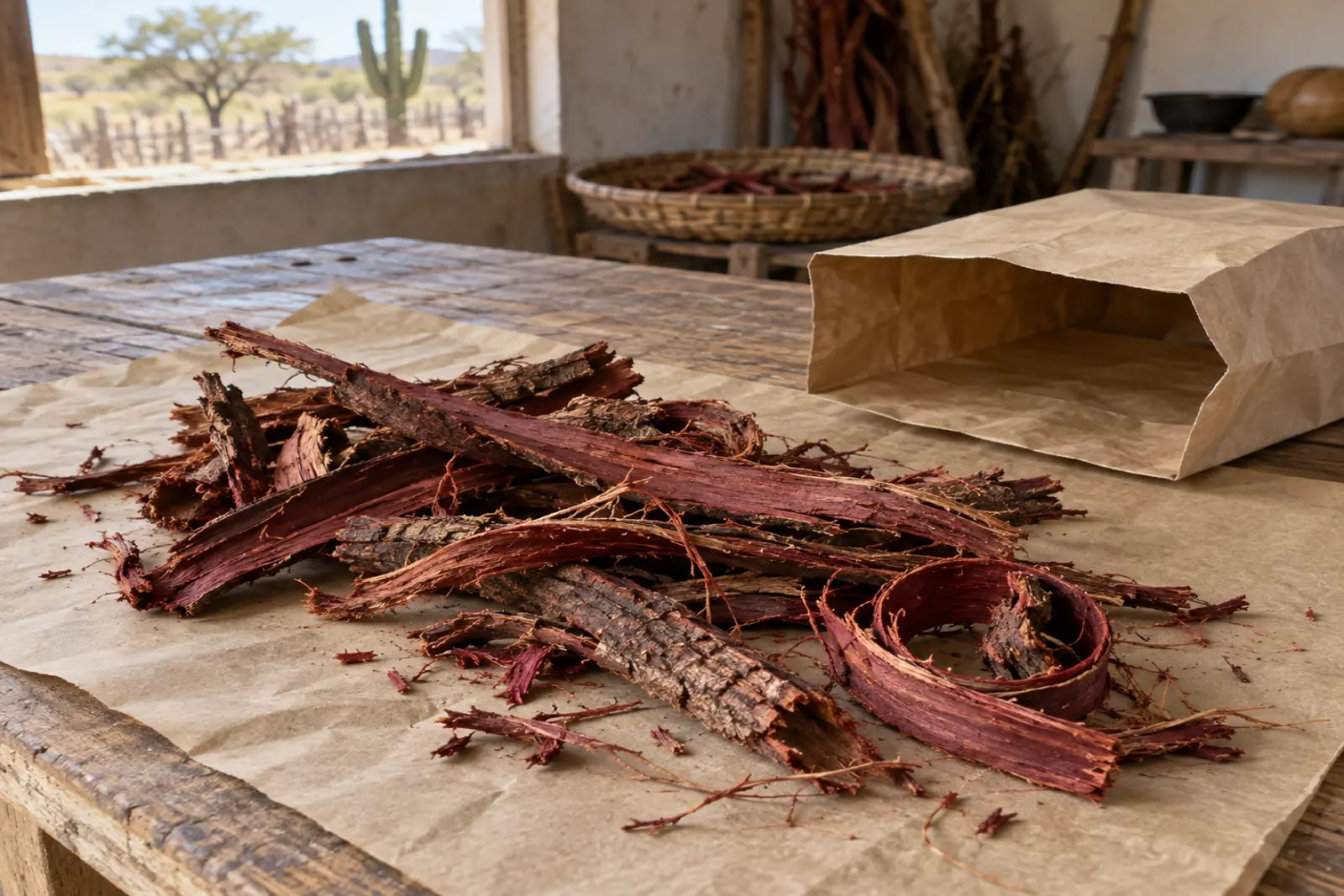
Scan photo · illustration Fresh jurema bark measured in Paraíba held 48 to 91 % water on a dry-weight basis. It has to be dried thoroughly before it can be stored.
Open checkpoint 03: Forms and quality -
16 Oct 2026Caatinga, north-east Brazil 02Roots dug and inner bark stripped
Jurema preta has good regrowth capacity after its stem is cut. No published study describes how commercial root bark is dug, or how trees fare after it.
Open checkpoint 02: Harvest -
16 Oct 2026Caatinga, north-east Brazil 01Batch starts at a jurema tree in the dry forest
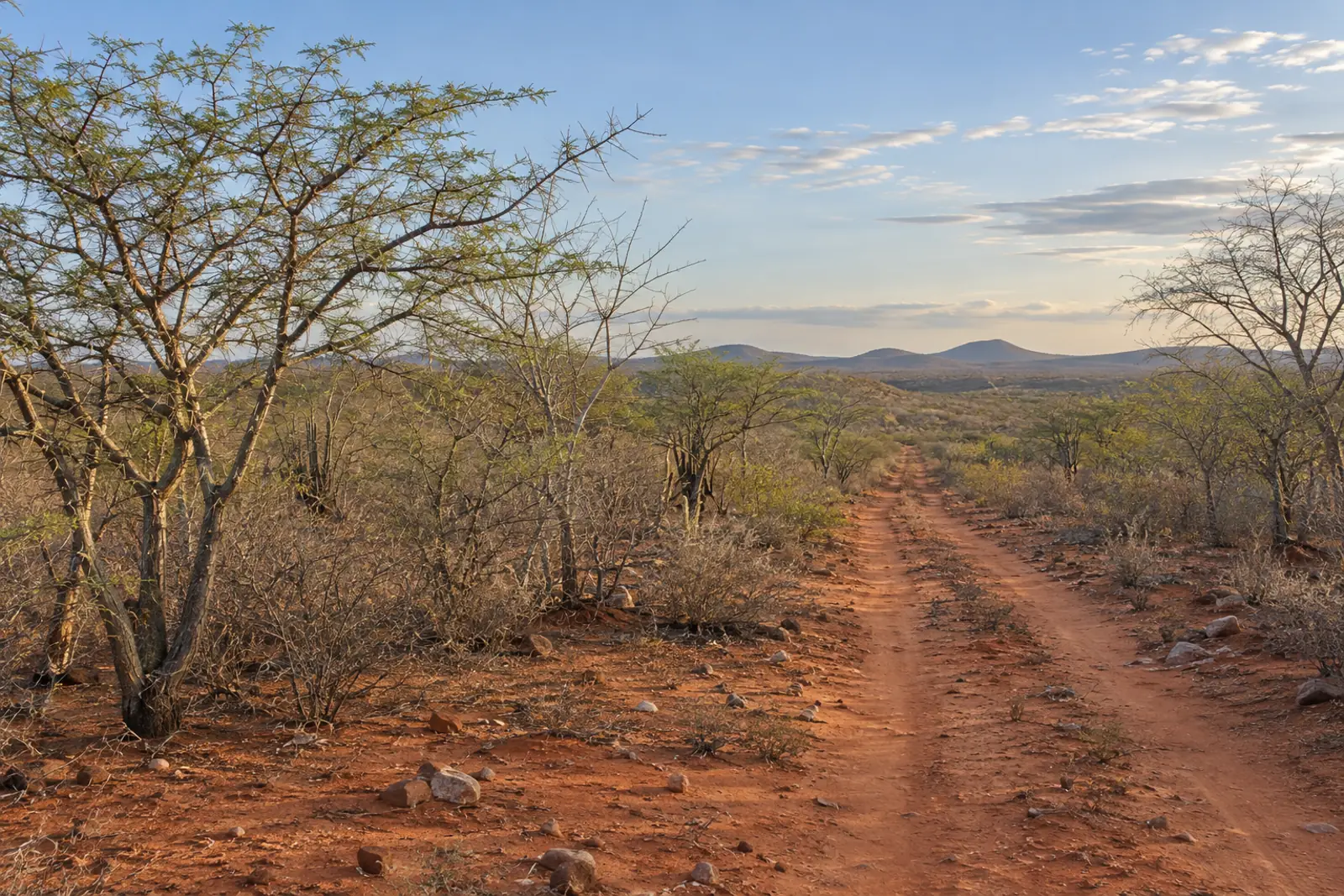
Scan photo · illustration The official Brazilian flora lists Mimosa tenuiflora as native in ten states, in the Caatinga and the Cerrado. In Mexico it forms thickets in Oaxaca and Chiapas.
Open checkpoint 01: Origin
Notes on this batch
Updated 16 Oct 2026
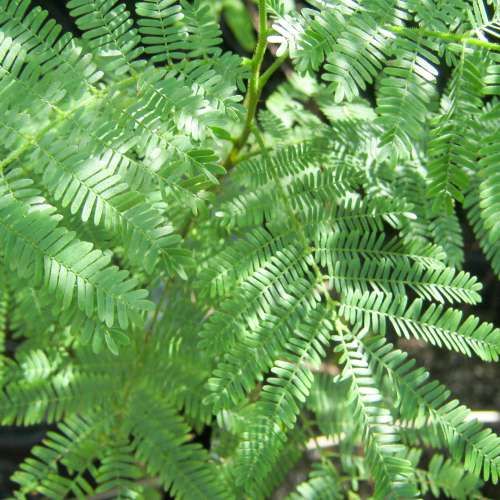
Mimosa hostilis root bark is the dried inner bark of the roots of Mimosa tenuiflora, a thorny pioneer tree of the dry Caatinga forest in north-east Brazil that also grows wild in southern Mexico. This site follows one example batch along the supply chain, from the tree to a sealed bag, and stops at every checkpoint where a buyer has a question. Each checkpoint has its own page with sources and the date we checked them.
The short version per checkpoint
- Origin. The tree is native from southern Mexico to Venezuela and north-east Brazil. The official Brazilian flora lists it in ten states. No public trade statistic shows how much root bark leaves either country.
- Harvest. The tree resprouts well after its stem is cut, and Brazilian forest rules ask for cutting cycles of at least 15 years. How commercial root bark is dug is not described in any study we could find. The Caatinga around it has lost 15 % of its natural area since 1985.
- Forms and quality. Whole inner bark shows its colour and condition; shredded bark and powder hide both. Fresh bark is very wet and has to be dried well before storage.
- Naming. Mimosa tenuiflora is the accepted name; Mimosa hostilis is a synonym from 1875. "Hostillis" with a double l is a common misspelling, and the address of this site uses it.
- Legal status. DMT, which the bark contains, is controlled in every country covered here. The bark itself is legal to buy in the Netherlands, listed as a narcotic in France, and legally risky in the United Kingdom, the United States, Germany and Belgium.
- Buying guide. Avalon Magic Plants sells the inner root bark whole, from 50 grams to 10 kilos, for adults and for a stay in the Netherlands.
What is in the parcel
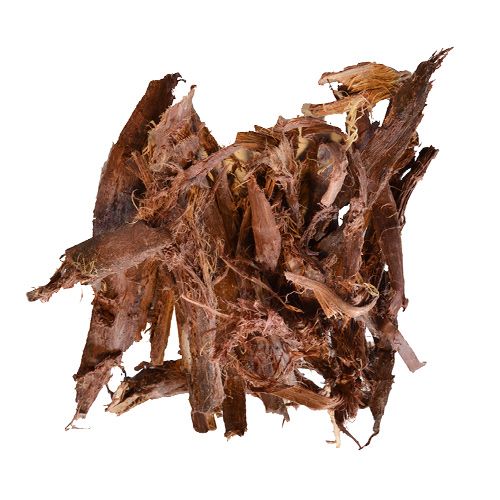
Avalon Magic Plants describes this bark as whole inner root bark imported from Brazil, sold as a dye and tanning material and as a botanical specimen. The shop states that it "is not sold or intended for the purpose of human consumption". This site gives no instructions for extracting, preparing or dosing anything, and it does not link to such instructions.
For readers outside the Netherlands
If you live where the bark is controlled or uncertain, the tree itself is often a safer subject. Seeds are sold by the same shop, and the harvest checkpoint explains why a home-grown tree is never a practical bark source. Read the legal checkpoint for your country first.